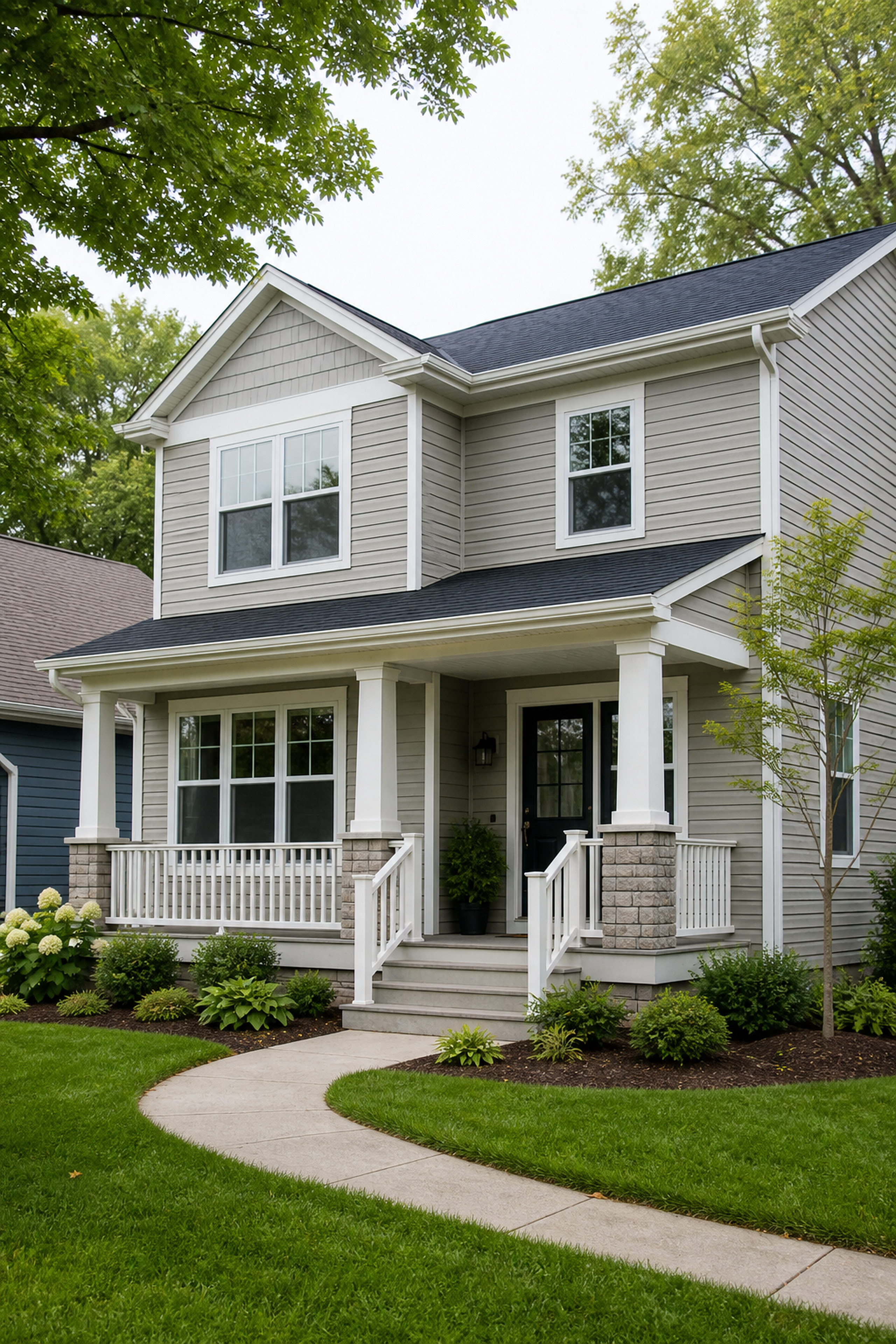
Siding replacement is one of the biggest visual changes a homeowner can make to the exterior of a house. It can make a tired home feel sharper, clean up years of wear, and improve how the exterior handles weather.
But siding is not just a color decision. It touches windows, doors, trim, soffit, fascia, gutters, light fixtures, utility penetrations, and the wall assembly underneath. If those details are not planned carefully, even good siding material can look unfinished.
Before starting a siding project, it helps to understand the decisions that shape both appearance and performance. The goal is not to make the project more complicated. The goal is to make the finished exterior feel complete.
Siding is more than the field material
Replacing siding changes the whole exterior, not just the flat wall surface. Trim, corners, window surrounds, soffit transitions, gutters, lighting blocks, and door details all affect how finished the home feels.
The best siding projects are planned around the entire exterior so the new material looks intentional instead of simply attached to the house.
That planning matters because siding touches so many other parts of the home. A siding project can expose hidden moisture, reveal trim issues, affect gutter lines, and change how windows, doors, and exterior lighting relate to the rest of the facade.
Decisions to make before work begins
A siding estimate should help narrow down the practical choices before crews arrive. That includes performance needs, maintenance expectations, and the level of finish the homeowner wants.
It is usually easier to make these decisions before the project starts than to make them in a hurry while work is underway. The more the plan accounts for details, the cleaner the finished exterior tends to feel.
- Material type and expected maintenance
- Color, profile, and how the siding works with the roof
- Trim style around windows, doors, and corners
- Whether fascia, soffit, or gutters should be updated at the same time
- How existing damage or hidden moisture will be handled if discovered
Material choice should match the home and the homeowner
There is no single siding material that is right for every house. Some homeowners care most about low maintenance. Others care about a specific profile, texture, color range, or long-term curb appeal. Budget, exposure, shade, tree coverage, and neighborhood character all matter.
A helpful contractor should explain the tradeoffs without burying the homeowner in product jargon. The right recommendation should connect the material to the way the home actually performs in Minnesota weather.
Start with why the siding is being replaced
Some siding projects begin because the exterior looks tired. Others begin because the home has damage, moisture concerns, loose panels, fading, cracking, or repeated maintenance issues. The reason for the project should shape the plan.
If the main goal is curb appeal, color, profile, trim, and visual balance may drive the conversation. If the goal is performance, the estimate should spend more time on wall condition, water management, weather barriers, flashing details, and how problem areas will be addressed.
Many projects are a mix of both. Homeowners want the exterior to look better, but they also want confidence that the work behind the siding is being handled correctly.
Do not skip the wall condition conversation
Siding covers the wall, but it does not erase what is happening behind it. If there has been water intrusion, pest damage, poor flashing, or old installation work, those issues need to be accounted for before new siding goes on.
A responsible estimate should explain what can be seen now and what may only be discovered once old material is removed. Homeowners should know how hidden damage is documented, priced, and approved if it comes up during the project.
This is one of the reasons transparent communication matters. No one wants surprise costs, but it is better to address hidden problems correctly than to cover them and have the new exterior fail early.
Why trim and transitions matter
Most homeowners notice siding problems at the edges first. Uneven trim, awkward utility blocks, poor caulk lines, and messy transitions can make a new exterior feel unfinished.
Planning those details early helps the finished project look cleaner and can reduce surprises during installation. Window trim, door casing, corner boards, frieze details, and the transition into soffit or fascia all shape the final look.
This is also where workmanship shows. Straight lines, clean edges, thoughtful blocks, and consistent reveals can make the difference between a siding replacement that looks basic and one that feels deliberately finished.
Color choices should be tested in real light
Siding color can look very different on a sample board than it does across an entire house. Sunlight, shade, roof color, window trim, landscaping, and neighboring homes all affect how the color reads.
Before making a final choice, homeowners should look at samples outside at different times of day. A color that feels warm in the morning can feel flat in shade, and a bold choice can become much stronger once it covers a large wall.
Trim color matters just as much. High contrast can make the home feel crisp and architectural. Lower contrast can feel quieter and more classic. The right answer depends on the style of the home and how much attention the homeowner wants the trim to carry.
Think through gutters, fascia, and exterior details
Siding work often overlaps with gutters, fascia, soffit, and other exterior details. If those pieces are worn, mismatched, or poorly placed, updating siding alone may not give the home the finished look the homeowner expects.
This does not mean every related item has to be replaced. It does mean the estimate should identify what will stay, what should be repaired, and what would be easier to handle while the siding project is already underway.
Plan for disruption before the project starts
Siding replacement affects the exterior of the home for days or weeks depending on scope. Homeowners should understand where materials will be staged, how access around the home will work, and what areas need to be kept clear.
It is also worth asking about pets, gates, landscaping, outdoor furniture, lighting, cameras, and anything attached to the house. A little planning before installation can prevent avoidable stress once crews are working.
Good project management shows up in these details. The homeowner should know who to contact, what the sequence looks like, and how questions will be handled during the job.
Think about long-term curb appeal
A siding project is a good time to step back and look at the home as a whole. The right combination of siding, trim, gutters, and roof color can make the exterior feel sharper while still fitting the neighborhood and the homeowner's taste.
Before finalizing the plan, look at the roof color, window color, landscaping, masonry, and front entry. Siding is a large visual surface, so a small color or trim decision can change the whole feel of the home.
- Ask to review material samples in natural light
- Consider whether trim should contrast or blend
- Plan around the roof color and gutter color
- Confirm how utility penetrations and light blocks will be handled
- Make sure repair allowances and hidden damage procedures are clear
The finished exterior should feel complete
A siding project should not leave the homeowner feeling like the walls were updated but the rest of the exterior was forgotten. The best results come from thinking about the home as one composition: siding, trim, roof, gutters, windows, doors, lighting, and landscaping.
That does not always mean doing everything at once. It means making siding decisions that will still make sense as other exterior improvements happen over time. A good plan can improve the home now while leaving room for future upgrades.
A successful siding replacement should feel like more than new panels. It should make the whole exterior look more intentional, protect the home better, and reduce the maintenance issues that made the project necessary in the first place.
When the scope includes materials, trim, transitions, wall condition, and project communication, homeowners can move forward with a clearer picture of what they are buying and why it matters.